
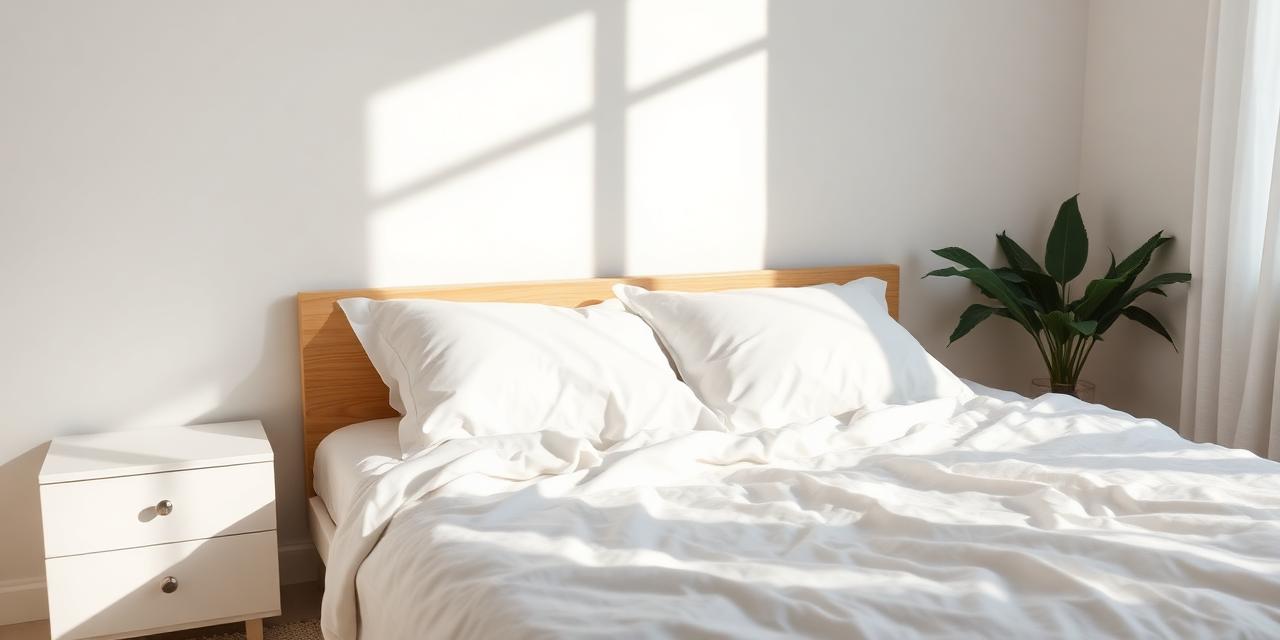
Akiko has been keeping a sleep diary for six months. At first she barely managed five hours a night — work emails, a noisy flatmate, a phone that never left her hand. Slowly, things have changed. She's moved her phone to the kitchen, bought blackout curtains and started a strict 11pm bedtime, even on Fridays. "I've never felt sharper at work," she says. "And I haven't caught a single cold in three months." She still struggles with weekends away from home, but she's stopped panicking about the odd bad night.
Unit 2 · Workbook
2A. Sleep tight — Workbook
Extra practice for home study · with answer keys
How to use this workbook
- Try each exercise on paper first — don't peek!
- Tap Show answer on a single item, or use the big button above to reveal everything.
- Re-do anything you got wrong the next day.
1. Vocabulary — sleep verbs and phrases
Choose the option that best fits each sentence.
I usually ___ on Sunday mornings — it's my favourite ritual.
She kept ___ during the long film — she was that tired.
He couldn't stop ___ all night because of the heat.
After the red-eye from Singapore she was completely ___.
Three espressos after dinner? No wonder you're ___.
Important notes
Ask the teacher: Write down anything you want to remember from this section. Your notes are saved automatically.
Auto-saving
2. Vocabulary — wellbeing collocations
Complete each sentence with ONE word from the box.
Word bank — drag or tap, then tap a gap
- A 20-minute power drop in the afternoon does wonders.
- After two weeks off, I finally feel completely drop .
- My sleep drop is terrible — phone in bed, late dinners, no routine.
- She's been working 70-hour weeks; she's totally drop .
- These antihistamines make me really drop .
- I need a long weekend to properly drop .
Important notes
Ask the teacher: Write down anything you want to remember from this section. Your notes are saved automatically.
Auto-saving
3. Vocabulary — discursive writing
To what extent is modern society's 'hustle culture' responsible for the decline in global sleep hygiene?
Check your writing
- Use at least 4 sleep-related vocabulary items
- Maintain a formal, discursive register
- Use cohesive devices to link your arguments
- Check for varied C1-level grammatical structures
Important notes
Ask the teacher: Write down anything you want to remember from this section. Your notes are saved automatically.
Auto-saving
4. Grammar — simple or continuous?
Put each verb into the present perfect SIMPLE or CONTINUOUS.
I (study) ___ all evening and I'm exhausted.
She (read) ___ three novels this month.
We (live) ___ in Berlin since 2019.
You look stressed. ___ you (work) too much again?
He (know) ___ the answer for ages — he just won't say it.
How many cups of tea (you / drink) ___ today?
It (snow) ___ since 6am — look at the garden.
I (lose) ___ my phone — again.
Important notes
Ask the teacher: Write down anything you want to remember from this section. Your notes are saved automatically.
Auto-saving
5. Grammar — same form, different meaning
Both sentences are correct. Write a SHORT explanation of what each one suggests.
a) I've cleaned the bathroom. / b) I've been cleaning the bathroom.
a) She's written her dissertation. / b) She's been writing her dissertation.
a) I've waited two hours. / b) I've been waiting two hours.
a) He's smoked all his life. / b) He's been smoking all his life.
Important notes
Ask the teacher: Write down anything you want to remember from this section. Your notes are saved automatically.
Auto-saving
6. Grammar — find and fix the mistake
Each sentence has ONE mistake. Rewrite it correctly.
I've been knowing him since 2015.
She has wrote three emails this morning.
How long are you waiting for the bus?
I've been finishing the report.
We've lived here since ten years.
Important notes
Ask the teacher: Write down anything you want to remember from this section. Your notes are saved automatically.
Auto-saving
7. Reading — true / false / not given
Read the short text, then mark each statement T (true), F (false) or NG (not given).
- Akiko has been keeping her sleep diary for over a year.T / F / NG
- Her noisy flatmate was one of her early sleep problems.T / F / NG
- She now keeps her phone outside the bedroom.T / F / NG
- She has started doing yoga in the evenings.T / F / NG
- She still sleeps badly when she's travelling.T / F / NG
- She has had several colds this winter.T / F / NG
Important notes
Ask the teacher: Write down anything you want to remember from this section. Your notes are saved automatically.
Auto-saving
8. Writing — guided task
Write 60–80 words about your typical week of sleep. Include: (a) TWO present perfect continuous sentences, (b) ONE present perfect simple, (c) TWO sleep-vocabulary items.
Check your writing
- 60–80 words
- TWO present perfect continuous sentences
- ONE present perfect simple sentence
- TWO sleep-vocabulary items
- Clear personal voice
Important notes
Ask the teacher: Write down anything you want to remember from this section. Your notes are saved automatically.
Auto-saving
9. 🎧 Listening — gist & detail
Play the dialogue once for gist, then again for detail. (Dr. Patel meets Sara about insomnia.)
🎧 Dr. Patel & Sara · GP appointment about insomnia
📄 Show transcript
A: Good morning, Sara. Please take a seat. So, what brings you in today?
B: Hi Dr. Patel. I'm really struggling with my sleep lately. I'm just so tired all the time.
A: I see. How long has Sara been having trouble falling asleep?
B: It's been about a month now, maybe a little more.
A: And when you say 'struggling', how long does it take her to drift off some nights?
B: Oh, it can be awful. Up to two hours some nights.
A: That sounds rough. And what time does she wake up before her alarm?
B: Usually around 5 am, then I just lie there feeling frustrated.
A: Hmm. Has anything significant changed in your life recently? Perhaps around six weeks ago?
B: Well, yes, I started a new, quite intense job six weeks ago. That's probably it.
A: That often has an impact. I see here you downloaded a sleep app a while ago. Has she been using the sleep app she downloaded?
B: Not really — not consistently. I sometimes forget, or I don't feel like it.
A: Okay. So, what does the doctor recommend for the next two weeks? Let's try this: 20 minutes of slow breathing before bed, absolutely no phone or screens for an hour before, then we'll review it. How does that sound?
B: That sounds like a plan, Dr. Patel. I'll give it my best shot.
- How long has Sara been having trouble falling asleep?
- How long does it take her to drift off some nights?
- What time does she wake up before her alarm?
- What life change happened six weeks ago?
- Has she been using the sleep app she downloaded?
- What does the doctor recommend for the next two weeks?
Important notes
Ask the teacher: Write down anything you want to remember from this section. Your notes are saved automatically.
Auto-saving
10. 🎧 Listening — gap-fill (dictation)
Listen again and write the missing word in each line.
🎧 Dr. Patel & Sara — key lines
📄 Show transcript
A: Good morning, Sara. How have you been sleeping lately?
B: Not so great, Dr. Patel, to be honest. I've been having trouble falling asleep for about a month now.
A: Oh, I see. Can you tell me more about that?
B: I just lie there with my mind racing. And then, once I do finally drift off, I've been getting up before my alarm — around five.
A: That sounds frustrating. Has anything changed recently in your life?
B: Well, I started a new job six weeks ago. It's a lot of responsibility.
A: That's a significant change. And how are you feeling physically?
B: Exhausted, mostly. I haven't felt properly rested in weeks.
- How have you been lately?
- I've been having trouble asleep for about a month now.
- I just lie there with my mind .
- I've been getting up before my alarm — around .
- I started a new job six ago.
- I haven't felt properly in weeks.
Important notes
Ask the teacher: Write down anything you want to remember from this section. Your notes are saved automatically.
Auto-saving
11. 🔥 Challenge — sentence transformation
Rewrite the second sentence so it means the same as the first, using 2–5 words including the KEYWORD.
1. I started learning Spanish two years ago and I still study it. → I _______ for two years. (KEYWORD: BEEN)
2. This is my third coffee today. → I _______ today. (KEYWORD: HAD)
3. He started writing his thesis in January and is still writing it. → He _______ since January. (KEYWORD: BEEN)
4. The last time I slept well was Monday. → I _______ since Monday. (KEYWORD: SLEPT)
5. She moved here ten years ago and still lives here. → She _______ for ten years. (KEYWORD: LIVED)
Important notes
Ask the teacher: Write down anything you want to remember from this section. Your notes are saved automatically.
Auto-saving
12. 🔥 Challenge — word formation
Complete each sentence with the CORRECT form of the word in CAPITALS.
Her ___ has improved dramatically since she stopped using her phone in bed. (SLEEP)
He suffers from chronic ___. (INSOMNIAC)
After the holiday I felt completely ___. (REST)
Eight hours of sleep is surprisingly ___ for adults. (BENEFIT)
He's a self-confessed ___. (WORK)
The medication caused mild ___. (DROWSY)
Important notes
Ask the teacher: Write down anything you want to remember from this section. Your notes are saved automatically.
Auto-saving
13. 🔥 Challenge — odd one out
Three of the four share a meaning. Pick the ODD ONE OUT.
1. Words meaning 'sleepy':
2. Ways to fall asleep:
3. Restful states:
4. Sleep problems:
Important notes
Ask the teacher: Write down anything you want to remember from this section. Your notes are saved automatically.
Auto-saving
14. 🔥 Challenge — extended writing
Write a 120–150 word post titled "What I've learned about sleep this year". Use AT LEAST: 3 present perfect continuous sentences, 2 present perfect simple, 4 vocabulary items.
Check your writing
- 120–150 words
- At least 3 present perfect continuous sentences
- At least 2 present perfect simple sentences
- At least 4 vocabulary items from Lesson 2A
- Clear personal voice and reflection
Important notes
Ask the teacher: Write down anything you want to remember from this section. Your notes are saved automatically.
Auto-saving
15. Self-check
Tick the things you can now do confidently.
- I can use present perfect simple for finished results.
- I can use present perfect continuous for ongoing activities and visible results.
- I can use 'for' and 'since' correctly.
- I can describe sleep problems with at least 5 new words.
- I can describe wellbeing states (well-rested, overstimulated, depleted…).
- I can hear and produce /ʃ/, /dʒ/, /tʃ/ and /k/ clearly.
Important notes
Ask the teacher: Write down anything you want to remember from this section. Your notes are saved automatically.
Auto-saving