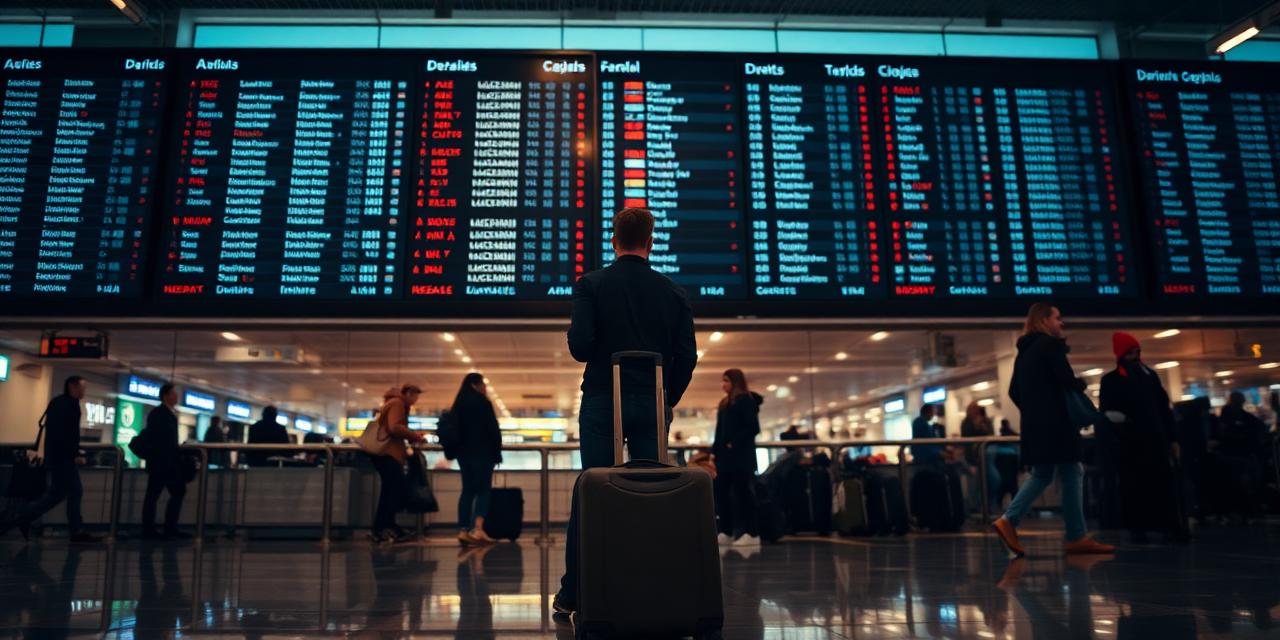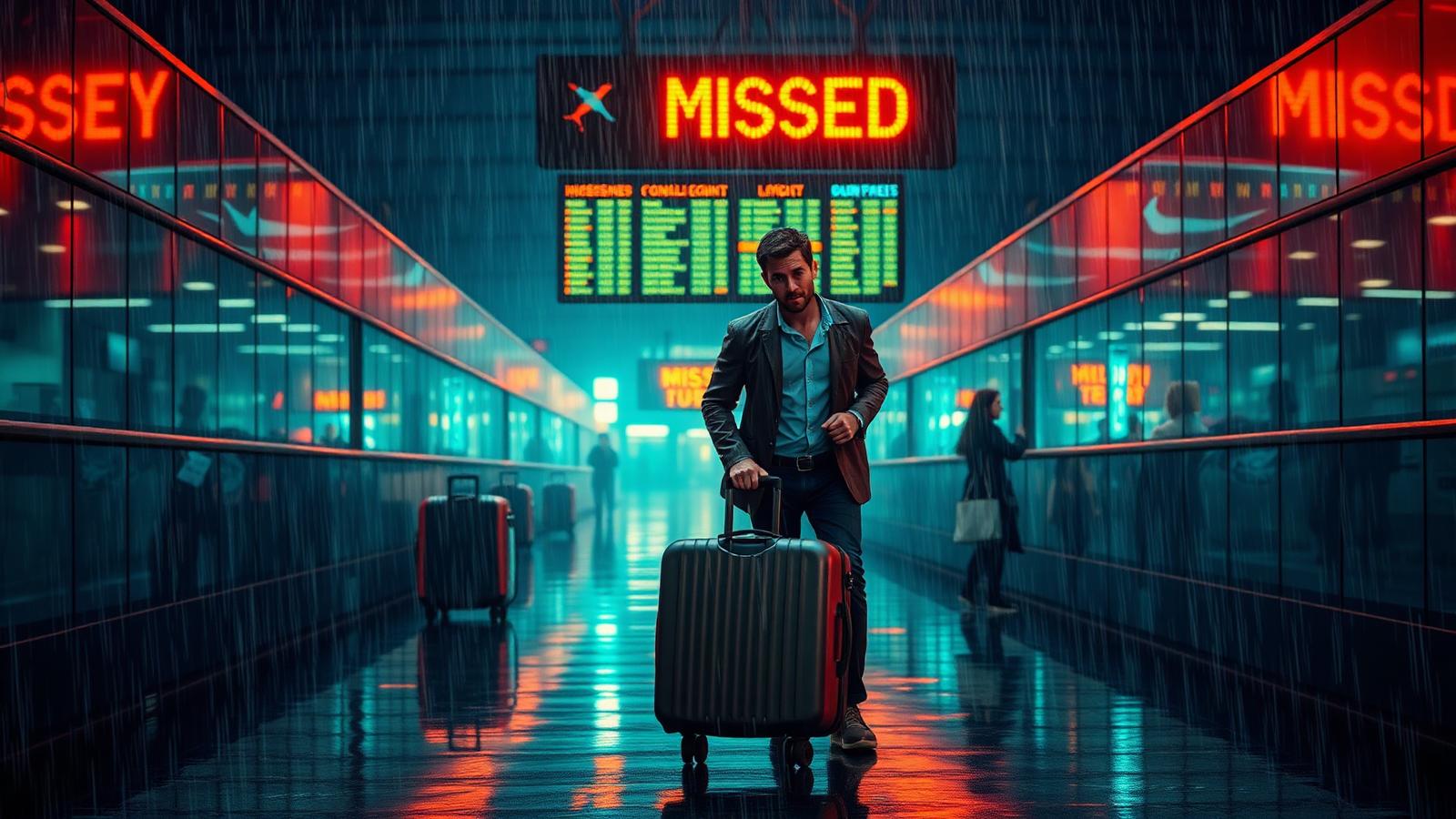
Frustrated traveller dragging a suitcase under neon lights in a rainy airport — travel mishap.
💬 Colloquial English 1 · Unit 1 extra

Travel mishaps

B2 · 45–55 min · Apex English

Unit 1 · Proverb
“Adventure is just bad planning.” — Roald Amundsen
The best travel stories are the ones that went wrong.
What is this?

Colloquial English — real, unscripted voices

Colloquial English sections give you a break from the textbook classroom voice. You'll listen to people speaking quickly, using idioms, slang and connected speech — just like in the street, in a café or on the BBC. Today's topic: three travellers tell us about their worst travel disasters.

Travel mishaps illustration
1. Warm-up

Mishap bingo

5 min

Tick (✓) anything on this list that has happened to YOU while travelling. Then find someone in the class who has ticked the same box and ask: “Tell me what happened!”

2. Predict

What do you think you'll hear?

3 min

You'll hear three short interviews. Before listening, predict which of these words you'll probably hear and which you won't.

passporttractorspaceshipwalletweddingembassysatnavostrichmeltdownsheep

(Spoiler: spaceship and ostrich are not in the recording — everything else is.)

3. Listening — street interviews

Three travellers, three disasters

15 min
🎙️ Interview: ‘What's the worst travel mishap you've ever had?’

Listen once for gist (general meaning), then again for the detail questions.

A. Listen for gist

  1. Which speaker takes the MOST responsibility for what went wrong, and which one blames bad luck the most?
  2. Rank the three stories from MOST to LEAST stressful in the moment, with one piece of evidence each.
  3. What attitude do all three speakers share by the END of their stories?
  4. Which TWO stories end thanks to a stranger's kindness — and how is that different from the first story?
  5. Each speaker uses one colloquial expression as a 'punchline'. Identify it for each story.

B. Listen for detail

  1. Reconstruct the EXACT timeline of speaker 1's morning: what time did she leave home, arrive at the airport, and discover the problem?
  2. The Iceland speaker says they were 'running on fumes'. What does this idiom mean here, and what TWO things were running low at the same moment?
  3. Why didn't the Iceland couple use the satnav as a backup? Give the precise reason mentioned.
  4. On the night train, WHEN exactly did the speaker realise the bag was gone, and what was her first reaction (her own words)?
  5. What practical detail did the embassy provide BEFORE issuing the emergency document, and how did the speaker pay for things in the meantime?
  6. Identify ONE moment in any story where the speaker contradicts or corrects themselves mid-sentence. Why is that typical of natural speech?
  7. What is the implied 'moral' of each story (one sentence each)?
🎧 Authentic Listening · real voices

Aggressive monkeys at Angkor Wat — a tourist's nightmare

Source: VOA Learning English (Bryan Lynn, adapted from AFP) · U.S. public domain · spoken at slower 'Learning English' pace

B1+ → B2≈ 3:30

A real news report from Voice of America about a very modern travel mishap: tourists being bitten and robbed by monkeys at one of the world's most famous temples. Listen to a professional American newsreader — natural intonation, real names, real places.

Tip: listen ONCE for gist (general meaning), then again with the transcript hidden for detail. Open the transcript only for a third listen.

1. Listen for gist

  • In ONE sentence, what is the main warning of this report?
  • Who is officially blamed for the monkeys' behaviour change — the monkeys, the tourists, or someone else?
  • Is the story mainly about a wildlife problem, a tourism problem, or both? Justify your answer.

2. Listen for detail

  1. What TWO kinds of damage are the monkeys causing? (one to people, one to the site)
  2. Which news agency originally reported the story, and which authority manages Angkor Wat?
  3. How many foreign tourists visited Angkor Wat last year, according to the report?
  4. What concrete action are Cambodian officials planning to take, and what is the aim?
  5. Quote ONE phrase showing the officials' worry about long-term cultural damage.

3. Glossary

macaque
a type of medium-sized monkey common in Asia
aggressive
ready to attack; hostile
to feed (sb / sth)
to give food to
influencer
someone with a large social-media following whose posts shape opinions
UNESCO World Heritage Site
a place officially recognised as having outstanding cultural value
domestic (animal)
tame; living with humans rather than in the wild
stonework
the stone parts of a building
census
an official count of a population
📄 Show full transcript

Cambodian officials are warning visitors to the nation's famous Angkor Wat complex of buildings to stay away from wild monkeys. They say the animals have become aggressive and destructive.

Officials blamed the behaviour of the macaque monkeys on visitors who feed the animals or interact with them. Social media influencers — many of them on YouTube — use video of the monkeys to grow their online followings.

The macaques are native to forest areas surrounding Angkor Wat, a UNESCO World Heritage Site in northwestern Cambodia. The monkeys have become more destructive of property around the popular tourist area.

The APSARA National Authority said a small number of YouTubers repeatedly feed the monkeys to create videos. This 'changed the monkeys' natural behaviour from being wild animals to domestic ones that are aggressive, steal food, and cause injuries among people.'

Agency spokesman Long Kosal told AFP that officials also worry about damage to ancient stonework. 'On top of biting visitors, they have been climbing up and pushing stones down, damaging temples,' he said.

Last year, more than one million foreign tourists visited the area. Cambodian officials have announced a plan to carry out a census of monkeys in public areas to identify and take away those presenting a danger to humans.

4. Discuss in pairs

  • Have you ever seen tourists behave badly with wild animals? Where, and what happened?
  • Is social media (likes, views, followers) partly responsible for risky tourist behaviour? Give one example.
  • Compare this story with the three street interviews — which 'mishap' would scare you most? Why?
4. Vocabulary — phrase decoder

Crack the colloquial code

10 min

Match each colloquial expression from the interview to its meaning. Tap to check.

  • an absolute nightmare
  • to have a (complete) meltdown
  • to end up + -ing
  • in the middle of nowhere
  • to lose the plot
  • to cost an arm and a leg
  • to nick (sth)
  • the lot
  • to sort sb out
  • fingers crossed

Use it

Complete each sentence with one expression from the box.

  1. The taxi from the airport ___. Eighty euros for ten minutes!
  2. We took the wrong road and ___ at a sheep farm.
  3. When she saw the empty boarding gate, she ___ in the middle of the airport.
  4. Someone ___ my backpack on the train — wallet, passport, ___ .
  5. The hostel manager really ___ us ___ when our booking disappeared.
5. Pronunciation

Connected speech: gonna, wanna, kinda, shoulda

7 min

When native speakers tell stories quickly, they squeeze words together. This is called connected speech. You don't need to copy it, but you DO need to recognise it.

🎧 Listen and repeat: written vs. spoken
WrittenSpoken (fast)
I am going to miss my flight.I'm gonna miss my flight.
I should have double-checked the time.I shoulda double-checked the time.
It was kind of crazy, to be honest.It was kinda crazy, to be honest.
We ended up walking the whole way.We ended up walkin' the whole way.
It cost me an arm and a leg.It cost me an arm 'n' a leg.
Fingers crossed it works out!Fingers crossed it works out!

Tip: NEVER write “gonna” or “shoulda” in formal writing — emails, essays, exams. They only belong in speech, texts, and dialogue in fiction.

6. Speaking

Your turn (solo): record your worst travel mishap

8 min

Solo task — record a 90-second voice note (phone or laptop) telling the story of your worst travel mishap. You MUST use at least FIVE expressions from section 4. Then listen back and tick which ones you actually used.

1 · Set the scene
  • Where, when, who with.
  • Hook the listener in one line: “Where do I even start?”
2 · Build the disaster
  • Use “ended up…”, “gonna”, “kinda”.
  • Slow down on the worst moment.
3 · Self-check
  • Play it back once.
  • Tick every expression you used. Aim for ⭐⭐⭐⭐⭐.
6b. Speaking challenge

30-second retell — no fillers

4 min

Now record the SAME story again in exactly 30 seconds. Keep the punchline. Drop everything else. You MUST still land at least THREE colloquial expressions from section 4. Compare both recordings — which one sounds more natural?

7. Writing

Write it for Instagram (100 words)

10 min (or homework)

Turn your story into a 100-word Instagram caption. Start with a hook line, use at least three colloquial expressions, and finish with a one-line lesson learned.

Example opener:

“So… picture this: 4 a.m., Bangkok-bound, smug as anything. Then the woman at the desk looks at my passport and goes ‘Sir… this expired three weeks ago.’ Absolute nightmare.”

8. Wrap-up

Exit ticket

3 min
⭐ Keep

One expression I want to start using.

🤔 Check

One expression I'm still not 100% sure about.

🎯 Use

One situation this week where I'll try to use it.

Challenge

Unit 1 · Colloquial English — Quick check

10 questions · 70% to pass · instant feedback after you submit.

  1. Q1.“Honestly, it was an absolute nightmare.” The phrase means…

  2. Q2.Choose the most natural completion: “We got lost and ___ sleeping in the car.”

  3. Q3.“The taxi cost me an arm and a leg.” This means it was…

  4. Q4.British informal: “Someone nicked my phone.” = Someone ___ my phone.

  5. Q5.“I lost the plot” when describing a stressful moment means you…

  6. Q6.Which sentence sounds the MOST natural in spoken English?

  7. Q7.“We were in the middle of nowhere” describes a place that is…

  8. Q8.“The embassy sorted me out” = the embassy…

  9. Q9.Which expression would you use to wish someone luck?

  10. Q10.Reorder the words for a natural story opener: ‘where / do / I / start / ?’

0/10 answered